Updates from COACH JENNIFER DIXON CRAVENS

Empowering Breast Care: Your Guide to Prevention, Self-Care, and Thriving Wellness

Empowering Breast Care: Your Guide to Prevention, Self-Care, and Thriving Wellness
 Empowering Breast Care: Your Guide to Prevention, Self-Care, and Thriving Wellness 
Ladies (and anyone who cares about breast health!), October might be Breast Cancer Awareness Month, but breast care should be a year-round priority. Breast cancer affects 1 in 8 women worldwide, but knowledge, prevention, and consistent self-care can make a huge difference. Let's dive into what breast care really means, how to prevent breast cancer, and simple tips to nurture your breasts daily.

What is Breast Care?
Breast care is all about supporting the health, appearance, and comfort of your breasts through mindful practices. It includes self-exams, nutrition, massage techniques, lifestyle habits, and emotional nurturing to promote lymphatic drainage, hormone balance, and overall vitality. Think of it as loving your body from the inside out!

Why is Breast Care Needed?
The Mind–Body Connection: Over-Nurturing & Breast Health
Many women—especially caregivers, leaders, and nurturers—tend to:
  • Put others’ needs first
  • Suppress their own emotions
  • Experience chronic stress or burnout
  • Neglect rest, nourishment, and self-care
This pattern of overextending yourself can contribute to:
 Physiological Effects
  • Chronic stress → elevated cortisol
  • Hormonal imbalance (especially estrogen/progesterone shifts)
  • Weakened immune surveillance
  • Inflammation in the body
These factors are linked in research to increased cancer risk, including breast health concerns—not as a single cause, but as part of a larger picture.
 
Emotional & Energetic Perspective 
In many holistic and mind-body frameworks:
  • The breasts symbolize nurturing, care, and emotional giving
  • Imbalance may show up as:
  • Over-giving without receiving
  • Emotional suppression
  • Lack of boundaries
This doesn’t mean emotions cause disease—but they can contribute to internal stress patterns that affect the body.
 
Signs You May Be Over-Nurturing
  • Feeling drained or resentful
  • Difficulty saying no
  • Prioritizing others at the expense of your health
  • Ignoring your body’s signals (fatigue, pain, stress)
 
 Breast Cancer Prevention: Key Strategies
While no method is foolproof, these evidence-based steps lower your risk:  
- Maintain a healthy weight and exercise regularly (30 mins/day).  
- Limit alcohol to 1 drink/day max.  
- Breastfeed if possible (it reduces risk by up to 4%).  
- Avoid hormone therapy unless medically necessary.  
- Get regular mammograms starting at age 40 (or earlier if high-risk).  
- Perform monthly self-exams: Stand in front of a mirror, check for lumps, dimpling, or changes in size/shape/nipple. Lie down, use circular motions from outer to inner breast.
 

Breast Care Tips & Prevention 
 1. Nutrition
  • Increase cruciferous vegetables (broccoli, kale, Brussels sprouts) 
  • Add flaxseeds (support estrogen balance) 
  • Limit processed foods and excess sugar 
  • Stay hydrated 
 2. Stress Reduction
  • Meditation, prayer, breathwork 
  • Journaling to release emotional buildup 
  • Creating healthy boundaries 
 3. Lymphatic & Breast Care
  • Regular breast self-massage to support lymph flow 
  • Dry brushing and movement (walking, rebounding) 
  • Wear properly fitted bras or go bra-free when possible 
 4. Herbal & Natural Support
(Consult a professional before use)
  • Red clover – supports detox pathways 
  • Burdock root – blood and lymph support 
  • Turmeric – anti-inflammatory curcumin)
  • Evening Primrose Oil (gamma-linolenic acid for tenderness), 
  • Flaxseeds (lignans mimic estrogen safely), 
  • Green Tea (catechins fight free radicals).  
 5. Vitamins & Minerals for Breast Health 
  • Vitamin D ( sunshine or 2, 000 IU sup.
  • Vitamin E (15mg for antioxidant protection
  • B6 (Hormone balance) 
  • Minerals -
  • Iodine (from seaweed, supports thyroid/estrogen detox)
  • Magnesium Glycinate (300mg for stress , hormone balance, and relaxation) -Why Magnesium Matters-Magnesium supports:
    • Nervous system relaxation (reduces stress hormones) 
    • Hormone balance (important for breast health) 
    • Lymphatic flow (muscle relaxation + fluid movement) 
    • Detoxification pathways (liver support) 
    • Inflammation reduction 
  • Low magnesium = more tension, stagnation, and stress in the body.

     6.Medical Prevention-Medical Safety First (Non-Negotiable Foundation)
  • Surgeon/oncologist clearance before any bodywork, heat, or pressure 
    • After Breast Cancer Surgery or Treatment be share to consult with health care provider 
    • Monitoring for infection, fluid buildup, or delayed healing 
    • Awareness of lymphedema risk (especially if lymph nodes were removed) 
  •  Important: Any “detox,” deep massage, or aggressive lymph work should be cleared by a clinician.
  • Routine mammograms (as recommended for your age/risk) Inquire about new screening techniques that are less invasive 
    • Clinical breast exams 
    • Know your family history 
 7.Lifestyle Balance
  • Prioritize rest and sleep 
  • Reduce exposure to environmental toxins (plastics, endocrine disruptors) 
  • Maintain a healthy weight and regular movement 
 8.Rebalancing the Nurturer
Healing isn’t about stopping your nurturing nature—it’s about including yourself in your care.
Affirmation:
 “I give and receive in balance. My body is supported, nourished, and protected.”
 
9.Castor Oil Packs /What Is a Castor Oil Pack?
A castor oil pack is a therapeutic application of castor oil plant–derived oil applied to the body with cloth and gentle heat.
It’s traditionally used to support:
  • Lymphatic circulation 
  • Detoxification pathways (especially liver & breast tissue) 
  • Reduction of inflammation and congestion 
Benefits for Breast & Lymphatic Health Avoid Overstimulation's of Lymph's 
Many holistic plans overdo lymphatic stimulation too early.
What is often missed:
  • Early-stage healing requires very gentle lymph support only 
  • No aggressive dry brushing or deep tissue work near surgical sites 
  • Focus should be: 
    • Deep breathing 
    • Light arm mobility (if approved) 
    • Gentle skin brushing away from incision areas only 
 Later phase (weeks–months): structured lymphatic drainage may be introduced carefully.
Watch Tissue, Fascia & Mobility Restoration
After mastectomy, scar tissue and tight fascia are major long-term issues.
Often missed support:
  • Guided scar mobilization (once fully healed) 
  • Gentle range-of-motion therapy for shoulders and chest 
  • Physical therapy (especially for frozen shoulder prevention) 
This is essential for long-term function and comfort.

Castor oil packs may help:
 ✔ Support lymphatic drainage in the breast and underarm area
 ✔ Reduce tenderness, swelling, and fluid retention
 ✔ Encourage circulation and tissue nourishment
 ✔ Promote relaxation and parasympathetic (healing) response
💚 Especially helpful for:
  • Breast tenderness (cyclical discomfort) 
  • Lymphatic congestion (underarms, chest) 
  • General breast self-care and prevention routines 
 What You’ll Need
  • Organic, cold-pressed castor oil 
  • Soft cotton or flannel cloth (breast-size) 
  • Plastic wrap or towel 
  • Heating pad or hot water bottle 
  • Old bra or wrap (to hold pack in place) 
Step-by-Step Instructions
1. Prepare the Pack
  • Fold cloth into a size that comfortably covers the breast (or both breasts if desired) 
  • Saturate with castor oil (not dripping, but well soaked) 
2. Apply to Breast Area
  • Place cloth over: 
    • Breasts (avoid nipple if sensitive) 
    • Underarm/axillary lymph nodes 
    • Upper chest (lymph drainage pathways) 
3. Cover & Add Heat
  • Cover with plastic wrap or towel 
  • Place heating pad on top (warm—not too hot) 
 Leave on for 30–45 minutes
4. Relax & Restore
  • Use this time for: 
    • Deep breathing 
    • Meditation or prayer 
    • Gentle music 
 This enhances lymphatic and nervous system healing
5. Remove & Clean
  • Remove pack and wipe area with warm water or mild soap 
  • Store cloth in a glass container or bag (reuse up to 20–30 times) 
How Often to Use
  • 3–4 times per week for maintenance 
  • Daily (short-term) for deeper lymphatic support or tenderness 
Important Precautions
  • Do not use during pregnancy 
  • Avoid on open skin, infections, or immediately after surgery 
  • Do not use over known tumors without medical guidance 
  • Always listen to your body—stop if irritation occurs 
10.Enhanced Care / Lymphatic Practices 
Pair your castor oil pack with:
  • Dry brushing before application 
  • Gentle lymphatic breast massage 
  • Warm herbal tea (like dandelion or nettle) 
  • Light movement (walking or stretching afterward) 
11. Gua Sha Breast Care Techniques
Gua sha (scraping therapy) with a rose quartz or jade tool promotes detox and glow:  
1. Apply facial oil or serum.  
2. Hold tool at 15° angle.  
3. Start under bust: Stroke upward to collarbone (10x/side).  
4. Around breast: Clockwise circles from outer edge to center (10x).  
5. Between breasts: Light upward strokes to sternum.  
6. Neck/shoulders: Drain lymph upward. Do 5-10 mins, 2-3x/week. Avoid if pregnant or post-surgery.
 
12.Other Breast Care Techniques
Lymphatic Drainage Massage: Professional or DIY (Self Care) with light pumping motions.  
Cold/Hot Therapy: Alternate ice packs (1 min) and warm cloths for circulation.  
Acupressure: Press points like Kidney 1 (sole of foot) or Liver 3 (top of foot) for hormone support.  
Breathwork:4-7-8 breathing while visualizing pink light around breasts.  
Epsom Detox Baths: Full body detox + relaxation, Epsom salts + lavender oil weekly.
Epsom Salt Foot Detox: Frank sense, Baking Soda, Epsom Salt, Sea Salt , twice a week.
 Magnesium Oil – Great for lymphatic + localized support, and breast massages.
 
13. Hormonal & Metabolic Rebalancing
Breast cancer recovery often involves major hormonal shifts (natural or treatment-induced).
Commonly missed:
  • Liver support for hormone metabolism 
  • Blood sugar stability (important for recurrence risk reduction) 
  • Endocrine disruptor reduction (plastics, fragrances, etc.) 
Nutrition focus:
  • Cruciferous vegetables 
  • Fiber-rich foods 
  • Omega-3 support 
  • Anti-inflammatory plant-based meals 
Holistic Insight
The breast area is rich in lymphatic vessels and reflects both physical detoxification and emotional nurturing energy. Supporting this area regularly can help restore flow, balance, and awareness in the body.
Affirmation for Healing
“I nurture myself with the same love I give to others. My body flows freely, cleanses deeply, and restores naturally.”
 
The important Benefits of Breast Self-Care
Regular self-care boosts circulation, reduces tension, detoxifies lymph nodes, enhances skin elasticity, balances hormones, and fosters body positivity. It can ease PMS symptoms, improve sleep, and even detect issues early—potentially saving lives!
 The importance of setting healing goals and intentions
Intention for Healing & Recovery (Breast Care Focus)
I set the intention to honor my body with gentleness, awareness, and consistent care. I commit to supporting my breast and lymphatic health through nourishing choices, emotional balance, rest, and self-respect. I allow my body to release tension, stagnation, and stress while welcoming restoration, flow, and vitality. I choose to partner with my body in healing, prevention, and lifelong wellness.
 Release Statements (Letting Go of Stress & Stagnation)
  • I release overextending myself beyond my capacity. 
  • I release guilt for resting and receiving care. 
  • I release emotional suppression and unspoken stress. 
  • I release patterns of neglecting my own health. 
  • I release fear, worry, and overwhelm held in my body. 
  • I release stagnation in my lymphatic and energetic flow. 
  • I release comparison, pressure, and self-sacrifice. 
  • I release anything that blocks my body’s natural balance and healing capacity. 
 “I AM” Healing Alignment Statements
  • I am worthy of care, attention, and deep nourishment. 
  • I am aligned with balance in giving and receiving. 
  • I am committed to supporting my breast and lymphatic health daily. 
  • I am in tune with my body’s signals and needs. 
  • I am open to healing, restoration, and renewal. 
  • I am creating space for flow, circulation, and vitality in my body. 
  • I am safe to slow down and prioritize my wellness. 
  • I am becoming more aware of my body’s natural intelligence. 
  • I am consistent in caring for my physical, emotional, and energetic health. 
 Daily Affirmations (Breast Wellness & Whole-Body Healing)
  • My body is wise, and I listen to it with compassion. 
  • I support my breast health through love, care, and consistency. 
  • I choose foods, thoughts, and habits that nourish my wellness. 
  • My lymphatic system flows freely, clearing what no longer serves me. 
  • I release tension from my chest, shoulders, and emotional heart space. 
  • I give myself permission to rest, reset, and restore. 
  • I am gentle with myself as I heal and grow stronger each day. 
  • My body is supported, protected, and worthy of care. 
  • I am committed to prevention, awareness, and holistic self-care. 
  • Every day, I choose actions that support my long-term health and vitality. 
Closing Healing Statement (Integration Practice)
I am not in a rush to heal—I am committed to supporting my body with patience, presence, and love. I honor my journey and trust my body’s ability to respond to care, balance, and restoration.
 
Daily & Weekly Self-Care Tips to Implement -Establish  a Breast Care Plan 
Daily:
- Hydrate with 8+ glasses of water.  
- Dry brush breasts gently toward armpits for lymphatic flow (1-2 mins).  
- Apply natural oils like jojoba or evening primrose while massaging in upward circles.  
- Wear a supportive, non-underwire bra.  
 
Weekly:
- Warm compress + self-massage (5-10 mins): Use coconut oil, start at underarm, sweep toward collarbone.  
- Full-body yoga or stretching to reduce stress (cortisol spikes hormone risks).  
 Key Takeaway
Over-nurturing doesn’t directly cause breast cancer, but chronic stress, emotional suppression, and self-neglect can create internal conditions that impact overall health, including the 
 
We can over nurture those around us .
Your breasts are part of your power—treat them with the love they deserve! Share your favorite tip below, tag a friend, and follow for more wellness wisdom. Early detection saves lives: Schedule that check-up today. 💖 #BreastCare #BreastCancerAwareness #SelfCareRoutine #GuaSha #HolisticHealth. Sign up for 1:1 Wellness Coaching with Coach Jennifer 
 

In Wellness, Coach Jennifer 


Self Care & Wellness Tip for Winter & 2026

Self Care & Wellness Tip for Winter & 2026

Self-Care in 2026: Reset, Recharge, and Protect Your Energy

As the holiday season winds down and a new year begins, it’s the perfect time to pause, reset, and commit to practicing self-care—so you can step into 2026 feeling clear, strong, and ready. The end of one year and the start of another naturally invites reflection: What drained you this year? What supported you? And what do you want more of in 2026?

In 2026, self-care isn’t a luxury—it’s a need. With busy schedules, constant information, and high expectations, caring for your body and mind is one of the most practical ways to protect your energy, support your health, and stay resilient through the year ahead.

We made it ! 

Why Self-Care Matters in 2026

Self-care helps you show up better in every area of your life—work, family, relationships, and personal goals. It supports your ability to recover from stress, make clearer decisions, and maintain consistent energy. When you prioritize self-care, you’re also protecting key systems that determine how well you function day to day: your liver and kidneys, your nervous system, and your immunity.

The Key Systems to Guard in the New Year

Kidneys: Your kidneys help filter waste and maintain fluid and mineral balance. Hydration, sleep, and reducing excess stress all help support them.  It also  helps maintain essential body functions and prevents serious health complication like heart disease, high blood pressure, and kidney failure. Healthy kidneys are vital for overall well-being and longevity.

Nervous System: Your nervous system determines how you handle stress, focus, and rest. When it’s overloaded, everything feels harder. Calming routines and boundaries make a measurable difference.

Immunity: Your immune system is influenced by sleep, nutrition, movement, and stress levels. Supporting it consistently is one of the best ways to prevent setbacks and stay on track with your goals.

8 Self-Care Tips to Follow in 2026 (and Why They Work)

1) Hydrate daily—especially in the morning.
Why: Hydration supports kidney function, energy, digestion, and focus. Start your day with water before caffeine to help your body reset after sleep.

2) Build meals around real, nourishing foods.
Why: Whole foods provide the nutrients your liver, immunity, and hormones depend on. Aim for balance: protein, fiber, and healthy fats at each meal.

3) Create a simple sleep routine you can actually keep.
Why: Sleep is foundational for your nervous system, immunity, and recovery. Even a consistent bedtime and a 30-minute wind-down routine can improve sleep quality.

4) Support your liver after the holidays.
Why: Holiday seasons often include extra sugar, alcohol, and late nights. Supporting your liver in early 2026 can help you feel lighter, clearer, and more energized.

5) Move your body in a way that feels sustainable.
Why: Movement supports circulation, stress relief, metabolism, and mood. You don’t need extremes—consistency matters more than intensity.

6) Protect your nervous system with daily “quiet time.”
Why: Even 5–10 minutes of breathing, stretching, prayer, journaling, or silence can help your body shift out of stress mode and into restoration.

7) Strengthen immunity with the basics: sleep, food, and stress support.
Why: Supplements can help, but your foundation is lifestyle. When stress is high and sleep is low, immunity drops—so prioritize what protects you.

8) Set boundaries that match the life you want in 2026.
Why: Self-care isn’t only what you do—it’s what you stop doing. Boundaries protect your time, energy, and mental clarity, making your goals achievable instead of overwhelming.

Conclusion & Takeaway

The shift from one year to the next is more than a calendar change—it’s an opportunity to choose how you want to feel and function in 2026. When you practice self-care consistently, you strengthen your kidneys and liver, calm your nervous system, and support your immunity—so you can move through the year with more energy, resilience, and peace.

Takeaway: Start small, stay consistent, and remember: self-care is how you protect your health, your focus, and your future in 2026.
Wellness Coach Jenne

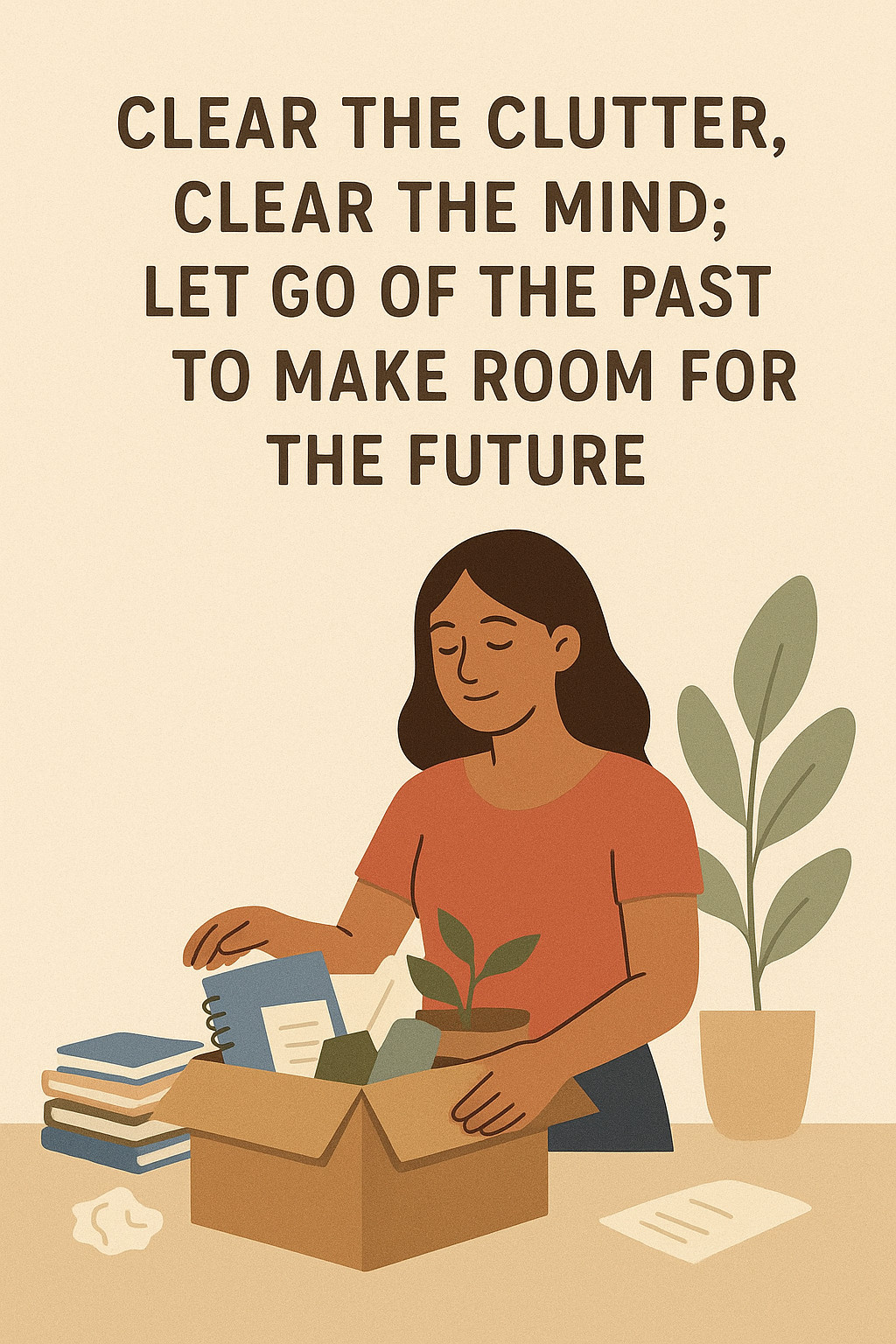
Embracing Self-Care: The Art of Letting Go of Clutter

Embracing Self-Care: The Art of Letting Go of Clutter
Embracing Self-Care: The Art of Letting Go
This topic came to me as I am clearing out my two college student storage units. Every May to August, I rent a storage unit for my two college students to store their dorm and apartment items while they are out of school during the summer months.  This four-month routine lasted for 7 months this year due to a lack of motivation and time. 

 As I am going through storage unit items, I am like Why do I still have this or that.  So, this blog is for those who are still holding on to artifacts, clutter items, and old things just because they don't have the time or interest in clearing them out. 

In our fast-paced day-to-day routine, we often overlook certain aspects of self-care like the powerful act of letting go—freeing ourselves from outdated situations, habits, and things that no longer serve our higher good. Embracing this release not only declutters our physical and mental space but also rejuvenates our spirit.

Defining Letting Go

Letting go is the conscious decision to release what holds us back. It's about identifying and parting with negative energy, relationships, commitments, and even physical clutter that drain our resources and hinder our growth.

Why is Letting Go Important for Self-Care?

Letting go is crucial for self-care because:

- Emotional Freedom: By releasing toxic relationships and negative emotions, you make room for positivity and love.
- Mental Clarity: A clutter-free environment and mind can enhance focus and productivity.
- Increased Energy: Eliminating what drains you allows for increased energy and creativity.
- Enhanced Well-Being: By prioritizing what’s truly important, you cultivate a more peaceful and fulfilled life.

Benefits of Letting Go-

1. Improved Relationships:
   - Say goodbye to toxic connections that drain you emotionally.
   - Open the door for healthier, more meaningful relationships.

2. Reduced Stress and Anxiety:
   - Declutter your home and workspace to reduce overwhelm.
   - Develop a stress-reduction routine that suits your lifestyle.

3. Personal Growth:
   - Create space for new opportunities.
   - Embrace change with openness and curiosity.

4. Enhanced Focus and Productivity:
   - Organize your environment for greater efficiency.
   - Prioritize tasks and goals that align with your passions and values.

5. Greater Self-Acceptance and Love:
   - Let go of self-criticism and negative self-talk.
   - Practice gratitude and recognize personal achievements.

Steps to Letting Go-

- Identify: Reflect on what’s holding you back or no longer serves a purpose.
- Declutter: Physically and emotionally, start with small steps, like clearing out a drawer or setting boundaries with others.
- Forgive: Release resentment and grudges, understanding that forgiveness is for your peace of mind.
- Focus: Always center on your goals and what truly matters to you.

As I am eliminating old things and situations, I am reminded of the importance of living in the now!
 What are you still holding onto?
What do you need to release or let go of?
How can you free up space, time, and energy? 

Takeaway: 
Letting go is a transformative power essential to our well-being. It involves more than just discarding the physical; it's about emotional and mental liberation. By choosing to let go of what no longer serves you, you embrace a path to self-care where peace, fulfillment, and personal growth are the norm. Begin this journey today, and unlock the limitless possibilities waiting for you. 

Remember, self-care is a lifelong journey, and the art of letting go is a significant step towards a more peaceful, empowered existence. 
Embrace it, and watch how it positively transforms your life.

In Wellness 
Jennifer 

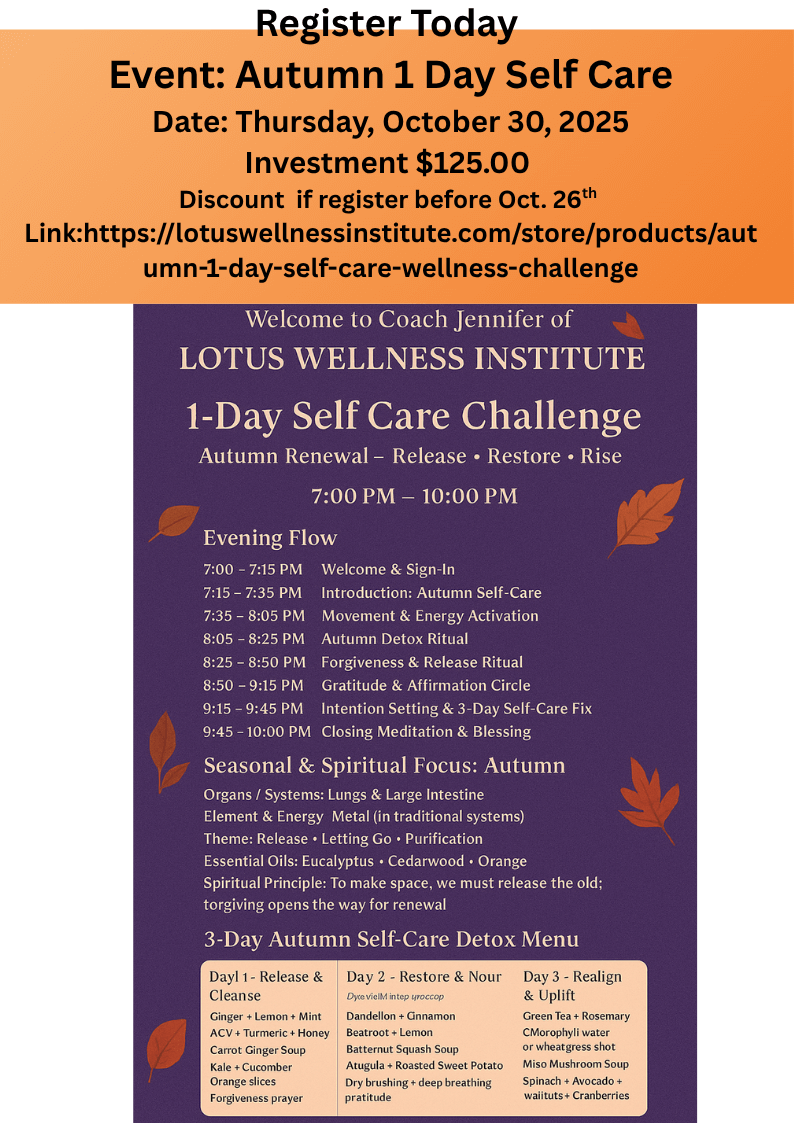
1 Day Autumn Self Care Challenge -Sign up Today

1 Day Autumn Self Care Challenge -Sign up Today
Title: Embrace the Autumn Glow: Join Coach Jennifer's 1 Day Autumn Self-Care and Wellness Challenge on October 30th

Autumn is here, and with it comes a golden opportunity to reset, recharge, and realign your mind, body, and spirit. As the leaves change and the air turns crisp, it's the perfect time to focus on self-care practices that nourish your inner world. I'm excited to share Coach Jennifer's 1 Day Autumn Self-Care and Wellness Challenge, happening live on October 30th from 7 pm to 10 pm. Whether you're a busy professional, a parent, or someone seeking deeper personal growth, this challenge will guide you through transformative practices tailored for the fall season. Let's dive into why autumn self-care is essential, what we'll cover, and how you can join in to plant seeds for a vibrant end-of-year journey.

Why Focus on Autumn Self-Care Practices?

Autumn isn't just about pumpkin spice lattes and cozy sweaters—it's a season of transition that mirrors our own lives. As nature sheds its leaves, we too are invited to let go of what no longer serves us, making space for renewal. Engaging in autumn self-care practices helps us adapt to the shorter days and cooler weather, which can affect our energy levels, mood, and immune system. This is the time to build resilience, support your body's natural rhythms, and prevent burnout before the holiday rush hits.

Focusing on self-care now sets the tone for the rest of the year. It's when we plant seeds of intention, make meaningful changes, and cultivate habits that carry us into winter and beyond. By prioritizing your well-being in autumn, you're not just surviving—you're thriving, creating a foundation for lasting health and happiness.

Supporting Your Body: Key Organs, Supplements, Vitamins, Minerals, and Herbs for Fall

In autumn, our bodies need extra support for organs like the lungs, kidneys, and immune system, which are more vulnerable to seasonal changes like dry air and fluctuating temperatures. Traditional wellness wisdom emphasizes strengthening these areas to ward off colds, fatigue, and emotional heaviness.

Here are some essential supplements, vitamins, minerals, and herbs to incorporate this season:
Vitamins and Minerals: Boost your intake of vitamin C (for immune support), vitamin D (to combat shorter days), and magnesium (to ease stress and promote restful sleep).
Supplements and Herbs: Turn to adaptogens like ashwagandha for stress relief, elderberry for immune defense, and turmeric for its anti-inflammatory properties. Herbs such as ginger and cinnamon can warm the body and improve circulation, while nettle leaf supports kidney function and provides a mineral boost.

These elements aren't just about physical health—they align with autumn's energy, helping you feel grounded and balanced. In the challenge, Coach Jennifer will share simple ways to integrate these into your routine, ensuring you feel empowered and informed.

### The Benefits of Autumn Self-Care and Our Mission and Goals

The benefits of these practices are profound. You'll experience improved energy, clearer skin, better sleep, and a stronger immune system, all while reducing stress and fostering emotional clarity. But it's more than physical—autumn self-care nurtures your mental and spiritual well-being, helping you release old patterns and welcome abundance.

Our mission with this challenge is to empower you to live a life of intentional wellness. Coach Jennifer's goals are simple yet transformative: to guide you in building sustainable habits that honor your body's needs, foster self-compassion, and create a ripple effect of positive change. By the end, you'll feel more connected to yourself and ready to tackle the year's end with confidence.

This time of year is especially special because it acts as a bridge between the busyness of summer and the introspection of winter. It's your chance to plant seeds for personal growth, make the changes you've been pondering, and set intentions that shape your future. Think of it as a seasonal reset that aligns you with nature's wisdom.

Nourishing Your Body and Soul: Teas, Tonics, Soups, and More

Fuel your autumn journey with warming, nutrient-dense foods and practices. Start with teas and tonics like a soothing ginger-turmeric blend to boost immunity and circulation, or a nettle and mint infusion to support detoxification. For tonics, try a simple apple cider vinegar mix with honey and cinnamon to aid digestion and balance blood sugar.

Don't forget hearty soups—think a root vegetable medley with carrots, beets, and squash, packed with vitamins A and C for glowing skin and strong immunity. These recipes aren't just delicious; they're designed to ground you and provide the comfort we crave in fall.

We'll also explore how to set your intention through guided meditations and journaling. Learn to practice forgiveness by reflecting on past hurts and releasing them with a simple release statement or prayer, like: "I release what no longer serves me, making space for new beginnings." Follow this with empowering "I am" statements, such as: "I am worthy of peace and abundance," to rewire your mindset.

Physical practices are key, too. Incorporate dry brushing to stimulate circulation and detoxify your skin, face rolling for lymphatic drainage and a natural glow, rebounding (like mini-trampoline exercises) to boost lymph flow and energy, walking in nature to clear your mind, and prioritizing hydration with warm herbal teas. Aim for at least 6-8 hours of restful sleep to recharge your body and spirit.

Dealing with Unfinished Business and Setting Goals for the Year Ahead

Autumn is the ideal time to tie up loose ends and let go. We'll address dealing with unfinished business—whether it's unresolved emotions, lingering projects, or relationships that no longer align with your path. Through targeted exercises, you'll learn to forgive yourself and others, letting go of people and things you've outgrown. This release creates space for fresh opportunities and helps you step into the holidays with a lighter heart.

Finally, we'll focus on making goals for the end of the year. What do you want to achieve by December? Set SMART goals (Specific, Measurable, Achievable, Relevant, Time-bound) and back them with action steps, all while tying them to your autumn intentions.

 Join the 1 Day Autumn Self-Care and Wellness Challenge

Ready to transform your autumn into a season of growth and renewal? Coach Jennifer's 1 Day Challenge on October 30th, 7 pm–10 pm, is your gateway to all this and more. In this interactive session, you'll receive personalized guidance, practical tools, and a supportive community to help you implement these practices right away.

Spaces are limited, so don't miss out—

Time to take the first step toward a balanced, vibrant fall. Remember, the changes you make now will set the tone for the rest of your year. Let's plant those seeds together!

With warmth and wellness,  
Coach Jennifer  

---

Self-Care and Breast Cancer Awareness: Empowering Your Health Journey

Self-Care and Breast Cancer Awareness: Empowering Your Health Journey
Self-Care and Breast Cancer Awareness: Empowering Your Health Journey-

October marks Breast Cancer Awareness Month—a time when organizations, healthcare institutions, and individuals come together to emphasize the importance of awareness, early detection, and self-care. Whether you're actively engaged in a health journey or supporting a loved one through theirs, understanding breast cancer risk factors and prevention strategies is crucial.

Understanding Breast Cancer-

Breast cancer occurs when cells in the breast grow uncontrollably. While it predominantly affects women, men can also be diagnosed with the disease. Thanks to advancements in medical research and awareness efforts, survival rates have significantly improved, especially with early detection.

Risk Factors-

Awareness begins with understanding the risk factors associated with breast cancer. Some of these include:

1. Genetic Factors: Mutations in genes like BRCA1 and BRCA2 can increase the risk.
2. Family History Having close relatives who have been diagnosed with breast cancer can be a significant risk factor.
3. Age The risk increases as you age, with most cases diagnosed in women over 50.
4. Lifestyle Factors: Sedentary lifestyles, poor diet, excessive alcohol consumption, and smoking can also increase risk.
5. Reproductive History: Early menstruation or late menopause, having children later in life or not at all, and not breastfeeding can play a role.
6. Hormonal Factors: Use of oral contraceptives or hormone replacement therapy has been associated with a slightly increased risk. Balancing hormones naturally can be an effective approach for many individuals, and there are several holistic options you might consider. Here are a few:

Maca Root: Known for its potential to balance hormones and boost energy levels, maca root is often used to support overall endocrine health.
Ashwagandha: An adaptogenic herb, ashwagandha can help manage stress levels and support thyroid function, which in turn may assist in hormonal balance.
Evening Primrose Oil: Rich in gamma-linolenic acid (GLA), this oil is often used to alleviate symptoms related to PMS and menopause.
Omega-3 Fatty Acids: Found in fish oil or flaxseed oil, omega-3s can support hormone production and reduce inflammation.
Magnesium: This essential mineral has a role in over 300 biochemical reactions in the body, including hormone regulation. It's often recommended for alleviating PMS symptoms.
Probiotics: Maintaining a healthy gut microbiome can influence hormone balance, so incorporating probiotics can be beneficial.
DIM (Diindolylmethane): Found in cruciferous vegetables, DIM can support estrogen metabolism, which may aid in balancing estrogen levels.
Rhodiola Rosea: Another adaptogen that can help manage stress hormones and support overall hormonal balance.
Before starting any new supplement, it's a good idea to consult with a healthcare provider, especially if you have existing health conditions or are taking other medications.

 Prevention Tips:
While some risk factors like genetics can't be changed, many lifestyle choices can help reduce your risk. Here are some actionable prevention tips:
1. Regular Screenings: Schedule routine mammograms and check-ups. Early detection dramatically increases treatment success rates.
2. Self-Examinations: Conduct monthly breast self-exams to become familiar with how your breasts feel and spot any unusual changes.
3. Healthy Diet Maintain a balanced diet rich in fruits, vegetables, and whole grains, while limiting processed foods and red meats.
4. Exercise Aim for at least 150 minutes of moderate aerobic activity or 75 minutes of vigorous activity each week.
5. Limit Alcohol and Avoid Smoking: Both are linked to increased risk, so moderating your drinking and quitting smoking can be beneficial.
6. Maintain a Healthy Weight: Obesity, particularly after menopause, is linked to a higher risk of breast cancer.
7. Minimize Stress: Incorporate stress-reducing practices like yoga, meditation, or hobbies that promote relaxation.

Self-Care and Awareness-
Self-care goes beyond physical health; it encompasses emotional and psychological well-being. Here are ways you can practice self-care during Breast Cancer Awareness Month and beyond:
Educate Yourself: Stay informed about breast cancer and empower yourself with knowledge. This can help you make informed decisions about your health.
Seek SupportConnect with support groups or therapy to share experiences and gain emotional support.
Make Time for You: Dedicate time each day to activities that bring joy and help you unwind.
Be Mindful: Practice mindfulness or journal to process emotions and reduce anxiety.

In conclusion, breast cancer awareness and self-care go hand-in-hand. Understanding your risk factors, adhering to prevention strategies, and practicing self-care can empower you in your health journey. Remember, awareness is not just about detection; it's about proactive steps to reduce risks and enhance your quality of life. This October, take a step towards a healthier future by prioritizing your self-care and becoming an advocate for breast cancer awareness within your community.

Get Involved, learn more about breast cancer and how you can make a difference, consider participating in local awareness events, fundraisers, or volunteer efforts. Your involvement can provide critical support to those affected and contribute to ongoing research efforts aiming to eradicate this disease.

By staying informed and proactive about your health, you can lead the fight against breast cancer and inspire others to do the same.

In Wellness, Light & Love 
Coach Jennifer